When you have a big presentation, how much prep is too much?
Is it memorizing every word? Is it still rehearsing the minute before you walk in?
I’m talking about the times when you have to give a talk, and you tell yourself one more pass will do it. Then one more after that. “Just to be safe.”
Whether it’s a presentation, an interview, or a pitch, you build the slides, which takes a while. Then you spend hours more on what you’ll say. And you’re still going over your notes the minute before you walk in to talk.
That was the case for Benjamin, one of our OG coaches.
He’s also a preacher. Every Sunday, he prepared his sermons the painstaking way.
“I used to write the whole sermon out, edit it, then go over my notes again and again. Sunday morning, I’d still be reviewing, right up to the last second.”
He practiced a single sermon six to eight times before he ever gave it.
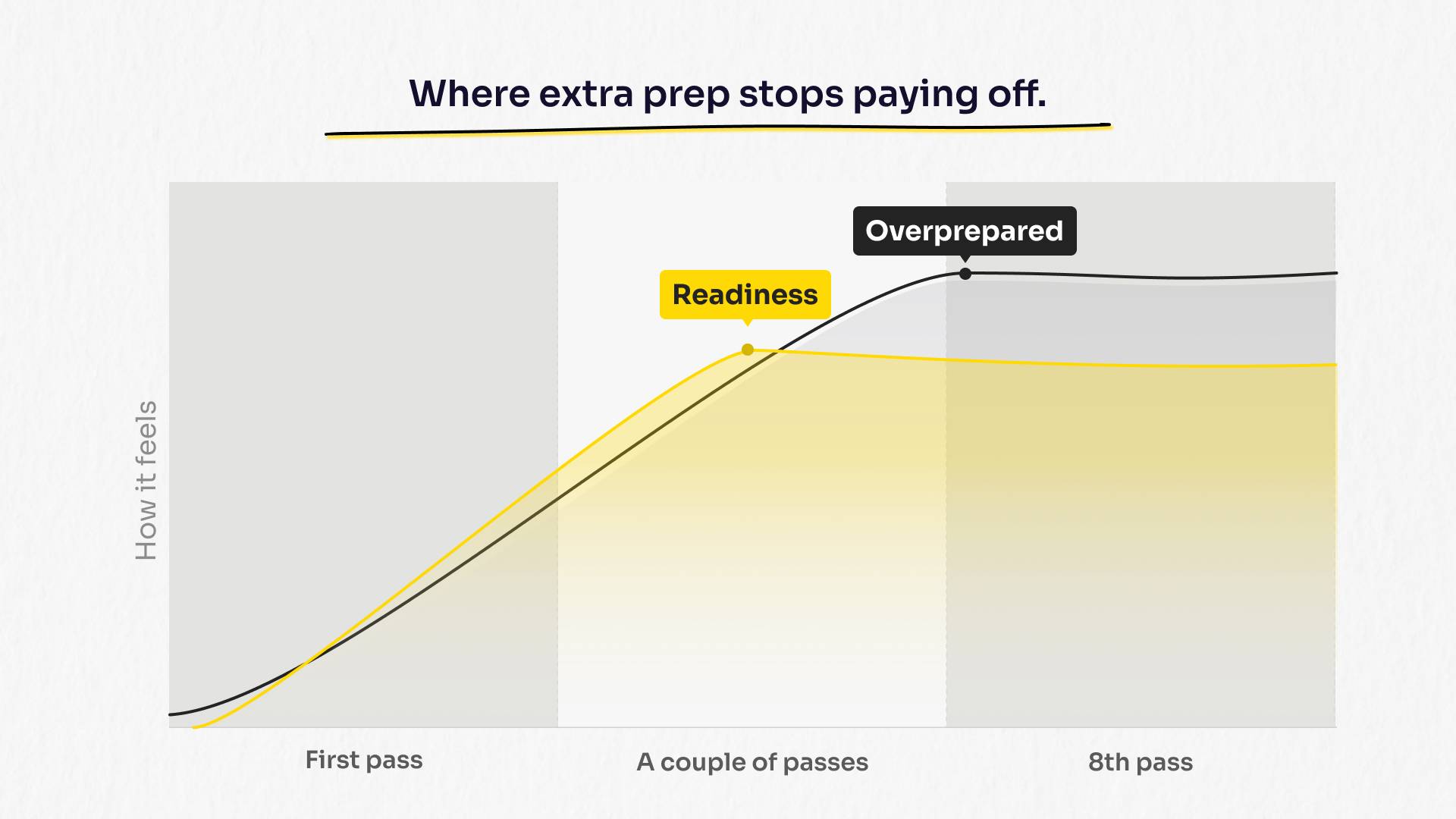
But by the eighth pass, he was just tired of listening to himself. “When the moment came, it wasn’t as exciting.”
Benjamin realized that preparing more did not make him more prepared. Past a certain point, every extra pass added tension instead of taking it away.
Why a memorized talk can’t move with the room
The same thing might happen to you. Picture yourself walking into a meeting with every word planned.
You’re two lines in when your manager cuts in with a question you didn’t see coming. Or the slide freezes. Or someone at the back checks their phone, and you wonder if you’re losing them.
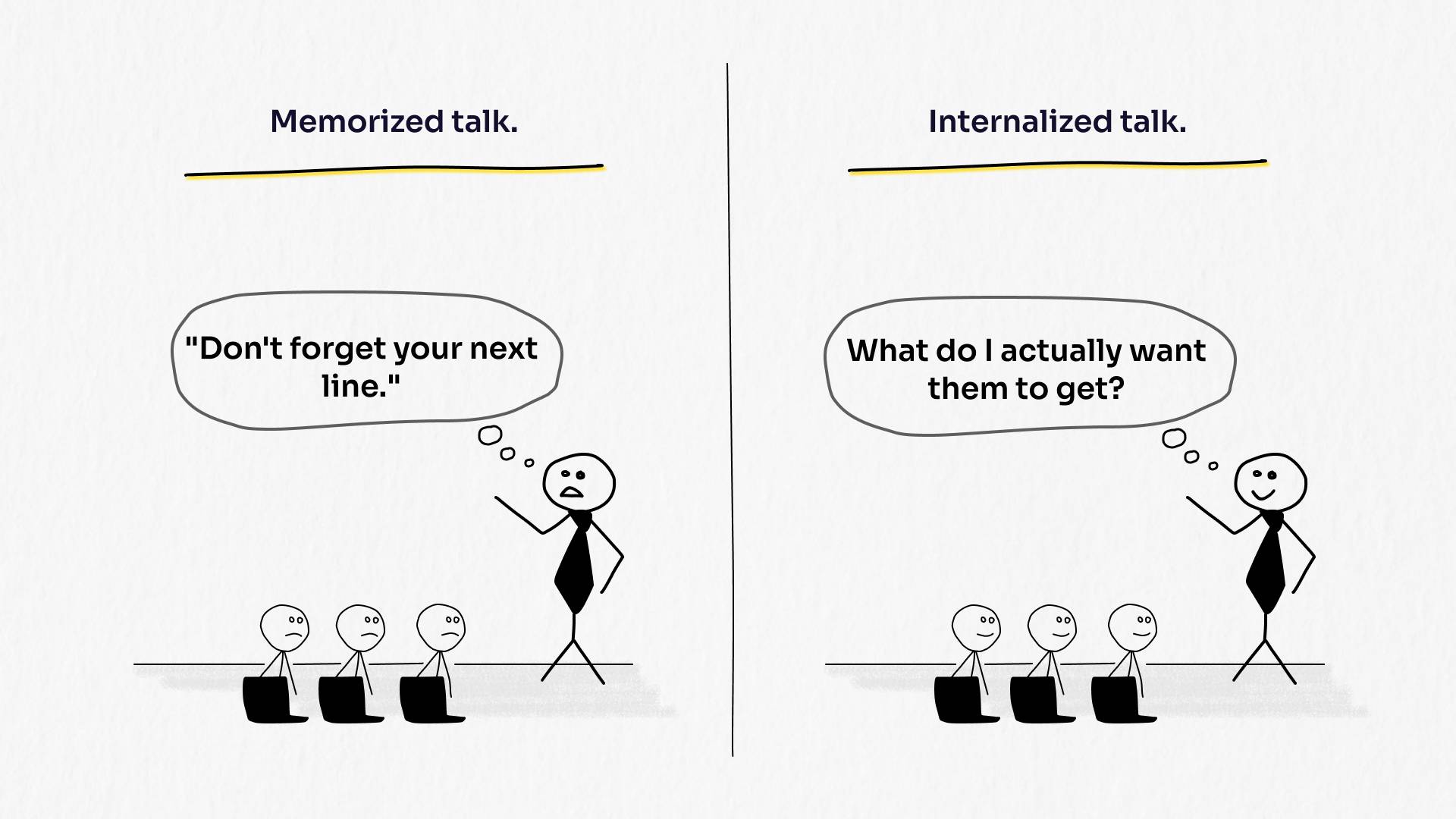
None of that was in your script, which means the talk you’ve memorized word for word can’t move with the room.
So for the next one, you prep even harder. “I’ll just do one more pass.” Just to be safe. Then one more after that.
Each pass, you change something. And every change is one more thing to memorize.
The more you rehearse to calm down, the more your brain practices everything that could go wrong. What if I blank? What if I lose my place?
It’s never quite good enough. For days, you can’t think about anything else.
The test for when you’ve gone too far
There’s a simple test. Give your talk out loud once, without notes. Then give it again, using completely different words.
If you can make your main point both times, you’re ready. Put the notes down.
The whole point is to move from a memorized talk to an internalized talk.
Three ways to move from memorized to internalized
1. Practice out loud, the way you’ll speak
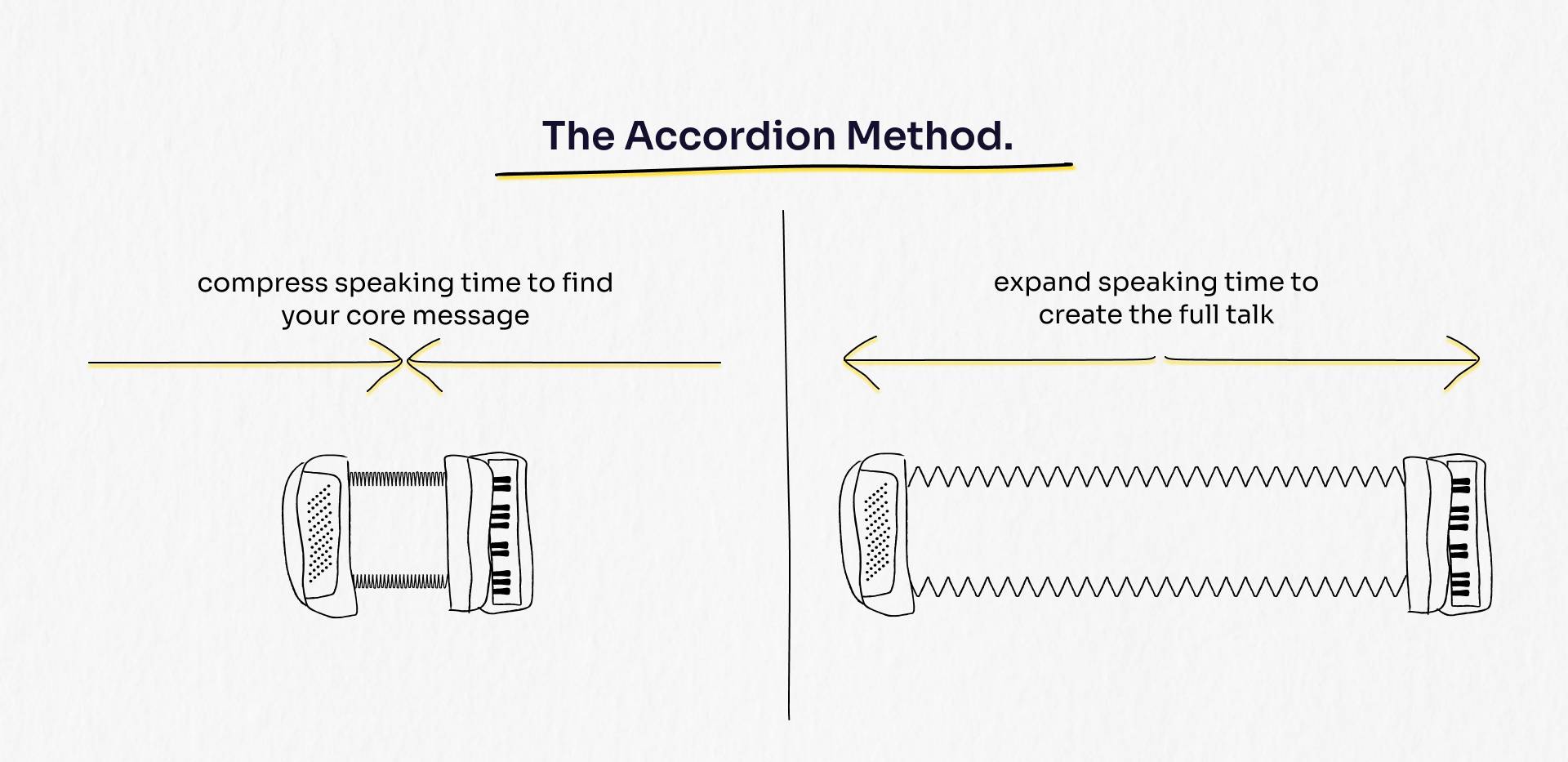
Benjamin used the Accordion Method. You give the same talk over and over, each time at a different length: three minutes, then one minute, then 30 seconds. Then you expand again to a longer talk, gradually.
Squeezing it into a minute forces you to find the one message that matters. Stretching it back out lets you say the same thing in a new way each round.
After a few passes, the point is in you, and you’re not clinging to a script.
2. Lock your key points. Let the rest come fresh
Decide the one point you need to make. Coach Benjamin calls it your “arrow.”
All you need to know is how you’ll open and how you’ll close your talk.
Then leave the middle open, so a better thought can show up in the moment.
Lock it too tight and you’ll talk right past opportunities to connect with the people listening to you.
3. Do a couple of reps on your talk. Then stop and relax
This one feels wrong to do, which is why people skip it.
Once you’ve run it out loud a couple of times, you’re ready. Every pass after that just drains the energy you want to bring on the day.
That’s Benjamin’s signature move. The night before a big sermon, he takes a long bath rather than preparing over and over. And it makes sense.
Think of a marathon runner. They don’t run a full marathon the day before to train. They save it for race day.
There’s probably a big meeting on your calendar right now you keep obsessing over.
Do one or two passes through your talk, and trust the message you want to deliver is already internalized in you.
If you prefer to practice this with people in a low-stakes environment, our free live classes are built for it. You show up, practice with others on the same path, and a coach gives you feedback in the moment.
See upcoming free live classes
Tristan
Common questions about presenting without notes
Isn’t it risky to walk into a big presentation without a script?
The script is the risky part. It can’t answer a question you didn’t see coming, and it falls apart the moment the room goes somewhere you didn’t plan. What holds up is knowing the one point you want people to leave with, how you’ll open, and how you’ll close. Prepare who you want to be in the room and what you want them to get, and the words organize themselves around that.
How many times should I practice a presentation?
Enough to pass the test: say it once without notes, then once more in different words, and make your main point both times. For most people that is two or three passes out loud. After that, every extra pass stops adding readiness and starts adding tension, because you are now rehearsing all the ways it could go wrong instead of the thing you want to say.
What do I do if I blank without my notes?
Go back to your arrow. Blanking usually means you were reaching for a line instead of the point, so say the point in whatever words show up and keep going. Nobody in the room knows what the next line was supposed to be. If you stay in character, a stumble reads as a pause, and the room waits for you.
Which class should I take for workplace presentations?
If your problem is nerves and freezing, take Fundamentals. If you feel comfortable speaking under pressure at work and want to sharpen your influence and clarity, take Professional L1. Even though it has the name “professional,” most people in professional roles or corporate environments, take Fundamentals L1 first. Professional L1 is a more intermediate course. Both are live, three one-hour sessions a week, and both make you present on the spot in small breakout rooms with coach feedback rather than watch videos.