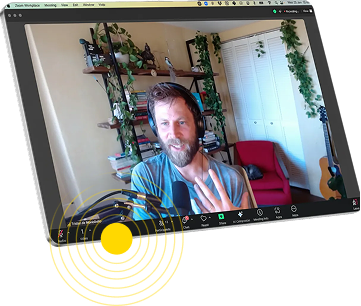
Michael ran an Ultra Theory class for over a hundred people.
A student asked him how to intentionally build human connection when you’re leading a room of people you don’t know well.
“What are some tools or tactics you can give us to help build connections?”
Michael’s answer:
“I’m gonna answer this in a super annoying way. If it’s a tactic, it’s not effective anymore.”
Then he showed the room what he meant.
Michael asked for a volunteer to facilitate a discussion. Someone who is direct, bold and decisive.
Dave, an executive coach who facilitates discussions all the time, raised his hand.
Michael asked him to facilitate a discussion on Creativity, in front of 100 people he had never met before.
Dave opened the discussion: “Who wants to take a stab at what creativity is?”
Three people answered.
“Creativity is expression.”
“Creativity is making new things.”
“Creativity is connection.”
Dave went quiet for a second, then said:
“Creativity is undefinable. So amorphous that words could never contain it.”
He moved on to his next question.
Michael stopped him.
“You came in with your own definition or your own perspective that became the source of truth. What happened?”
Dave’s answer:
“There was a moment at which I realized that I am not this decisive person that you asked for. And I was like, uh-oh, how can I do something decisive? Then I fumbled for something, and spoke before I thought, and that was what came out.”
The room laughed.
Liam, another student who was part of the discussion, spoke up:
“I feel more connected to him as a facilitator after he was transparent about what was going on in his mind. I trusted him more. And I’m sure I’m not the only one who felt that. Because he humanized himself in the conversation.”
Liam is the student who asked about tactics and tools to connect with people.
He wanted a method for creating that humanness with a group he had never met before.
What earned the trust in that room was Dave telling everyone where he was at. The fumble was just what it looked like from the outside.
Why tactics don’t build connection
Michael explained what would have happened if Dave had forced connection through tools and tactics.
“Once you think ‘Let me be strategic about it’, it’s game over. He won’t be able to deliver that in a way that will be natural and authentic.”
Even if the words came out identical, it still wouldn’t work.
To illustrate this more clearly, Michael used the example of being humble.
“The moment you think you’re humble, you’re not. You can’t try to be humble.”
Vulnerability and authenticity behave the same way. Michael explained why:
“I can’t be strategic about connecting with you. What I can do is connect with myself.”
The two ways people walk into a room
Now think about the last meeting you ran with people you didn’t know well.
The walk in usually goes one of two ways.
a) You feel lost. You have no idea how this could go well, so you bury yourself in your content and the tension builds the whole way there. By the time you start, you already feel terrible.
b) You start building a plan. You think of an opener, a couple of punchy lines to sound relatable, or even a small, careful admission about yourself, saved for the right moment. It’s all scripted to make a good impression and build trust.
Option b is the one that feels productive. It’s also the one Michael was warning the room about.
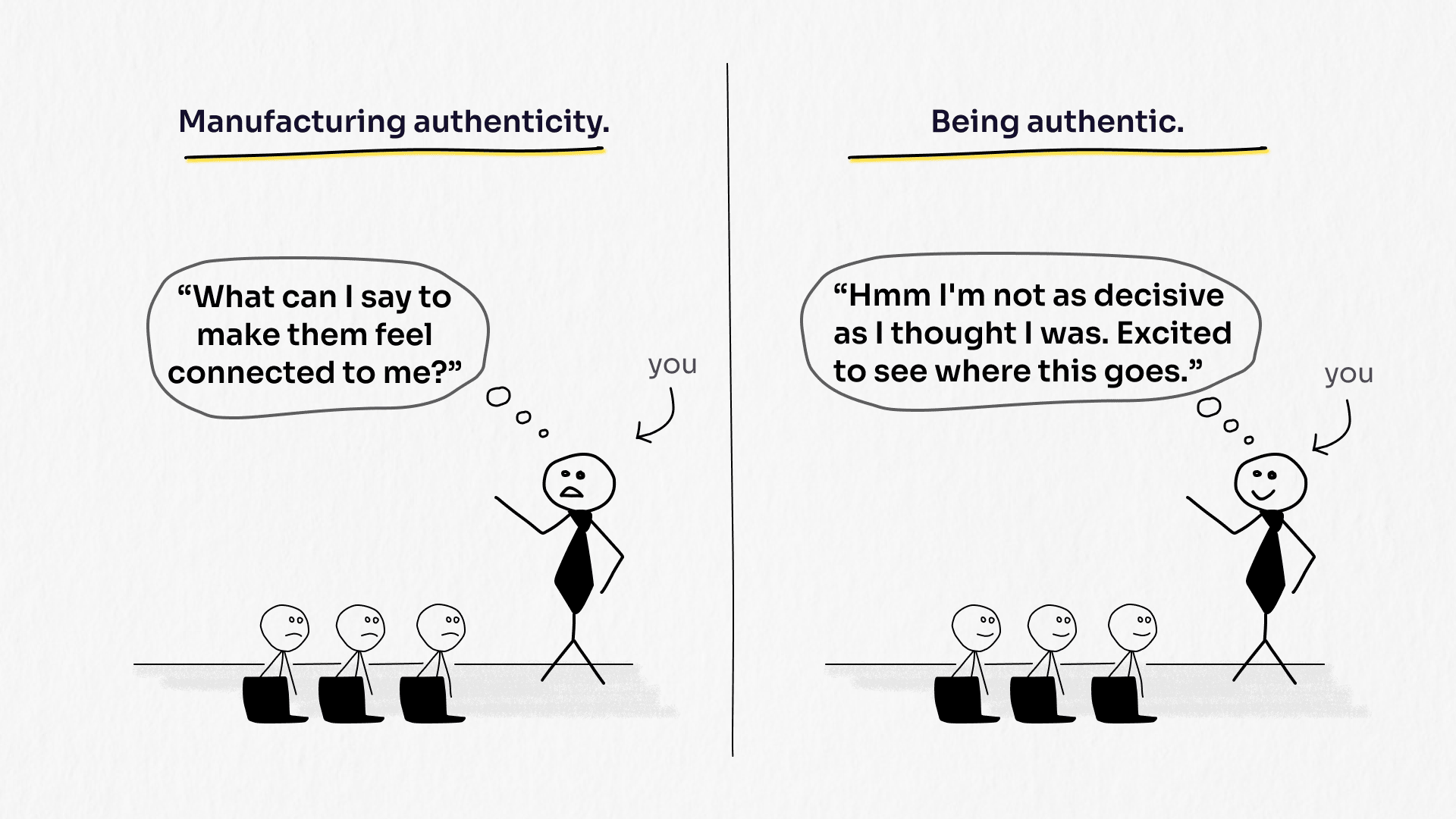
When you walk in planning how you’ll come across, you’re working on other people’s reaction to you. That’s something you can’t control. And the work shows.
What happens is the inverse of what you’re trying to achieve:

The only thing worth working on is how you’re doing with yourself.
You can’t manufacture authenticity. You can only be authentic.
The big lesson I want you to leave with today:
Stop trying to connect with the room, and get comfortable enough with yourself that you don’t need to worry about the connection.
How to become at ease with yourself
If you have a big psychological blocker around speaking, the room that matters is the wrong place to start. The stakes are real, so you spend the whole time afraid of losing control.
You need an environment where you feel high pressure and safe at the same time.
This is why we designed our free live class.
You can join a group you’ve never met, play speaking games designed to train your brain under pressure, and get feedback from our coaches and peers.
All without the risk of upsetting your boss or stakeholders.
I really think you’ll love it!
This is the one hour in your week you’ll definitely learn how to be yourself.
Tristan
Common questions about connecting with a room
How do I connect with a room of people I don’t know?
Stop trying to connect with the room. The more of your attention goes to managing how people see you, the less connected they feel to you. Put your attention on the conversation, and when something is going on for you, say it. Dave did that in front of a hundred strangers. He admitted he had fumbled because he was trying to look decisive, and the room trusted him more, not less. The connection came from him being honest about where he was, not from anything he had planned.
What should I say to build rapport at the start of a meeting?
There is no line that does it. As Michael told the class, if it’s a tactic, it’s not effective anymore. A rehearsed opener, a punchy joke and a carefully chosen admission all have the same problem: people can feel the plan. Before the meeting, prepare who you want to be in the room instead of what you will say. Then start with whatever is true for you in that moment, even if it is “I don’t know most of you yet, and I’m curious where this goes.” It only works when you mean it.
Why does trying to be authentic feel fake?
Because authenticity behaves like humility. The moment you think you’re humble, you’re not, and the moment you try to seem authentic, you’re performing. When you plan how you will come across, you are working on other people’s reaction to you. You can’t control that, and the effort shows. The only thing you can work on is how you’re doing with yourself. As Michael put it, “I can’t be strategic about connecting with you. What I can do is connect with myself.”
How do I get comfortable being myself in front of a group?
Start somewhere other than the room that matters. When the stakes are real, you spend the whole time afraid of losing control, so nothing new can happen. You need a place that feels high pressure and safe at the same time, where you can fumble in front of strangers and find out that nothing breaks. That is what our free live class is: an hour of speaking games in small groups, with a coach and people you have never met. Fundamentals gives you that three times a week, and the free app lets you practice on your own in between.