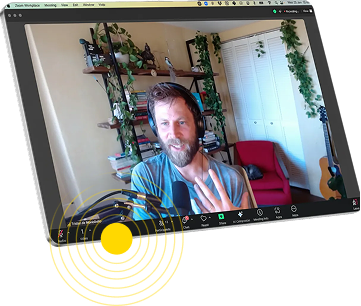
My co-founder Michael recently coached Liam, a manager at a cybersecurity company and one of our Ultraspeaking students.
Liam told him something I bet you’ll recognize.
“I still find myself struggling with presentations. But not the presenting part. It’s the questions and answers from my boss and colleagues that come after.”
Presenting is something you can prepare for. Questions are different. You don’t know what’s coming.
For Liam, questions make him feel like something is wrong with his work.
He gave Michael an example. He recently presented a project update to his peers, and a colleague asked, “How did you come to this conclusion from this data point?”
Even though Liam has been working with this data for weeks and knows it, he starts second-guessing himself. “Why does he want this data? Was I not clear? Is the number wrong? I feel like he’s challenging my thinking and not in a good way.”
His mind races ahead to where his colleague is going, and his body tightens.
“That tense feeling just comes running in the chest. I don’t know how to deal with that,” he said.
Liam feels that way because questions like that feel threatening, as if the people who work alongside him were trying to set up some sort of trap.
What he wanted from that coaching session was a way to, in his words, “not get cornered.”
When Michael asked what runs through his mind the second a hard question comes in, he named three more things, which I recognized from many other students who struggle with the same thing.
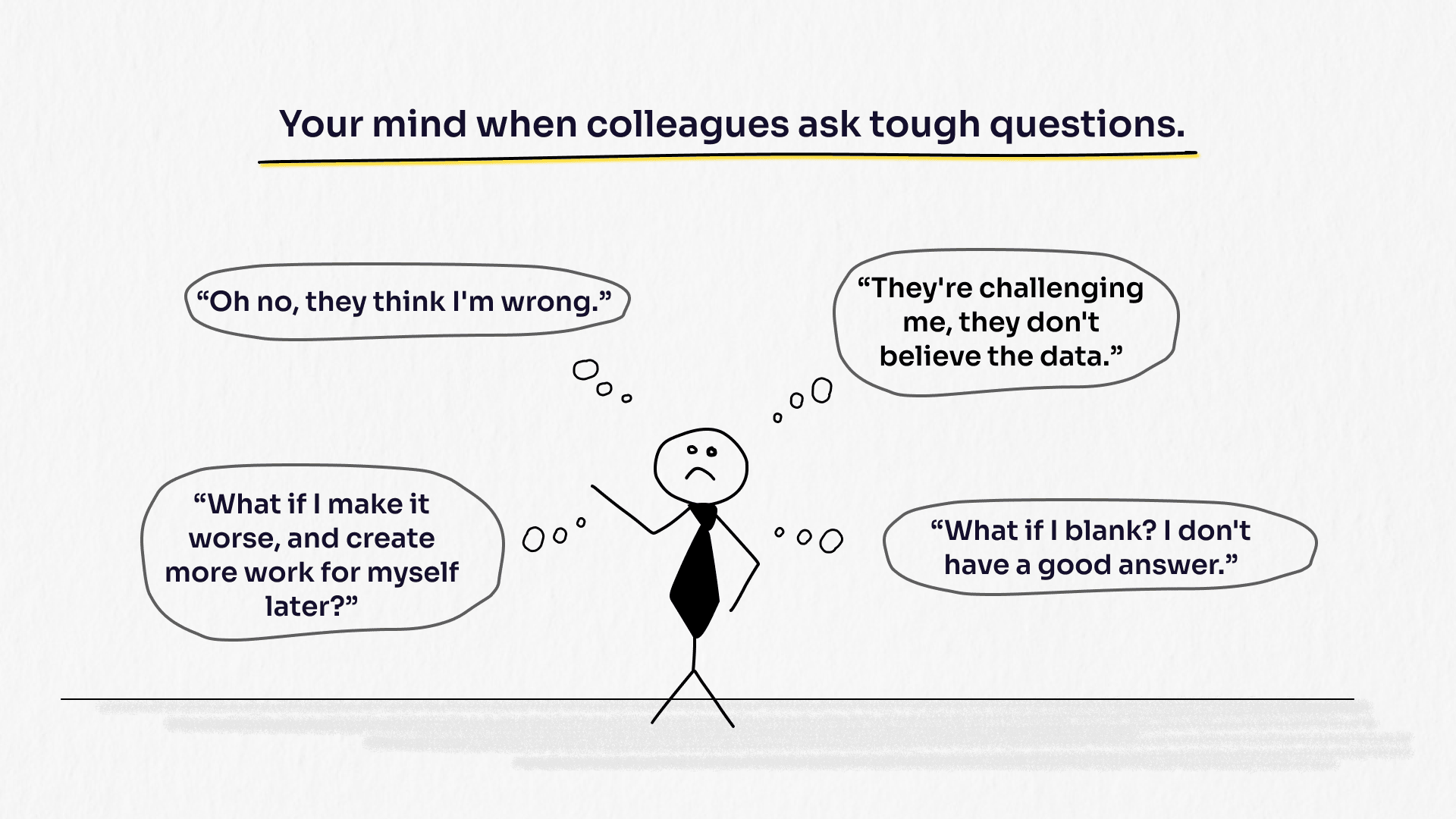
The three ways people respond to a tough question
As they worked through it, Michael shared with Liam the three ways people respond when a tough question comes up. I want to walk you through them, because I think one of them is running for you too.
Path 1: Fight
Your colleague probably asked the question because he was curious.
But you read it as a challenge, so you answer the challenge instead of the question.
You push back and defend your work. It feels like standing your ground.
But what you’ve really done is turn a simple question into a contest only you’re playing in your head.
As a result, the conversation gets tense, and without meaning to, you’ve made your colleague an opponent.
Path 2: Flight
You go around the question with a safe answer, or a vague “let me get back to you” that commits to nothing.
This was Liam’s instinct. In his words, “you answer the question but don’t really answer it.”
It feels safe. But your colleague still doesn’t have a clear answer, and you’ll probably be back having the same conversation next week.
Path 3: Fuse
You bring your colleague onto your side of the problem.
Instead of hiding what makes the question hard, you name the things you’re weighing and ask them to work it out with you.
When a colleague asked Liam what was behind the number, the fuse approach brings the tension into the open instead. Explain how you arrived at the number. Then invite him to collaborate.
This could look like, “Based on the data, I saw two approaches I considered. How do you think about it?”
That one question completely changes the dynamic.
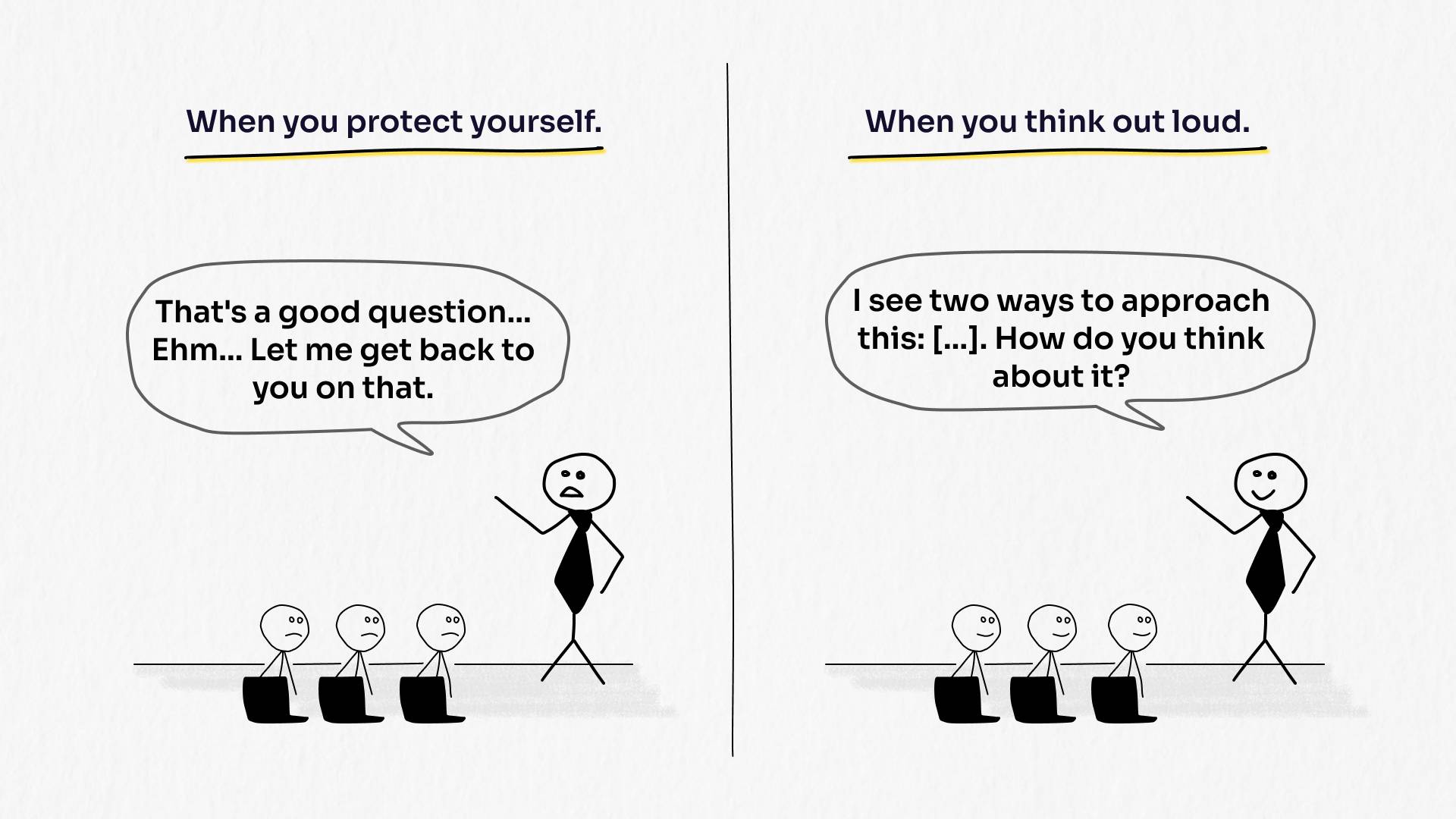
The colleague who you could see as an opponent starts thinking alongside you, and the two of you work it out together.
Liam’s first try
Michael had Liam practice by asking him a tough one. “Shutting down this product sounds like a no-brainer. Maintaining it costs us more than it is bringing in. Why haven’t you done this?”
His response: “You’re right. But here’s my challenge. My team has another big project to finish first. It’s all hands on deck for that. Shutting down this product isn’t just a switch. Can you help me think this through?”
He did it on the first try, and it sounded natural.
When you show how you’re thinking, you pull other people in to think with you.
In couples therapy, they demonstrate it like this.

At work it’s the same mindset, except you’re not holding hands.
People want to help once they can see what you’re wrestling with.
To me, this is the most thoughtful way to navigate tough questions from colleagues, peers, or even your boss if you trust them.
Try it in your next meeting
Next time you receive a hard question and you feel tense, pause.
Instead of jumping to an answer, name the two things you’re weighing.
Then ask them what you might be missing.
Notice what happens.
Most times, your colleagues or peers don’t mind you asking them to help you think through a challenge. They see you as someone who trusts them enough to be vulnerable and show their thinking before answering.
And that shows thoughtfulness and commitment in working together.
If you want to practice taking a hard question in a room where nothing is at stake, our free live classes put you on the spot with other people and a coach who gives you feedback in the moment.
See upcoming free live classes
Tristan
Common questions about handling tough questions at work
How do I stop feeling attacked when someone questions my work?
Notice that the attack is an interpretation, not the question. Most questions come from curiosity, and the tightness in your chest comes from the story you added in the half-second after. You can’t stop the first flash of tension, but you can catch the story, and the moment you see it as a story you have a choice you didn’t have before.
What if I genuinely don’t know the answer?
Say so, and think out loud. Name the two things you are weighing and ask what you might be missing. Not knowing is only a problem when you try to hide it with a safe non-answer. Shown openly, it reads as honesty and pulls the other person onto your side of the problem.
Doesn’t thinking out loud make me look unprepared?
The opposite. People trust what they can see, and a vague “let me get back to you” is what actually makes you look cornered. Trying to manage how you come across is what hands control to the room. Showing your thinking keeps it with you, and it usually ends with a better answer than either of you had alone.
What’s the best way to practice answering questions in meetings?
Not by over-preparing answers. You can’t predict the question, and a prepared answer makes you sound like you’re a robot. Practice the moment itself: someone asks you something you didn’t expect and you have to start talking. Ask a colleague to fire three questions at you about your project, answer each one in under 30 seconds, and notice where you fight, flee or fuse. Our free app has games built on this exact drill, and in our cohorts it’s most of what we do.
More related reading
People who pause appear more thoughtful and confident