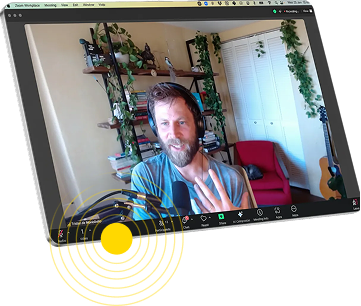
Years ago, I performed on stage for the first time. Alone with my guitar, about to sing to a live audience.
I asked for a chair because I didn’t want anyone to see my legs shake.
Halfway through my first song, I got to the part where I usually whistle. I hadn’t noticed my mouth was completely dry from anxiety.
Instead of a clear whistle, the audience heard:
“pfffftthhhhgghhhhhffftr”

Someone muffled a laugh.
I wanted to disappear. But I was only halfway through, and I was supposed to whistle again in thirty seconds.
I’ll tell you what I did in a moment. But first, I want to talk about a question I get all the time from founders:
“I get so nervous during presentations that I feel like everyone can tell. Should I just acknowledge it to break the tension?”
My answer: no. Here’s why.
The stain on your shirt
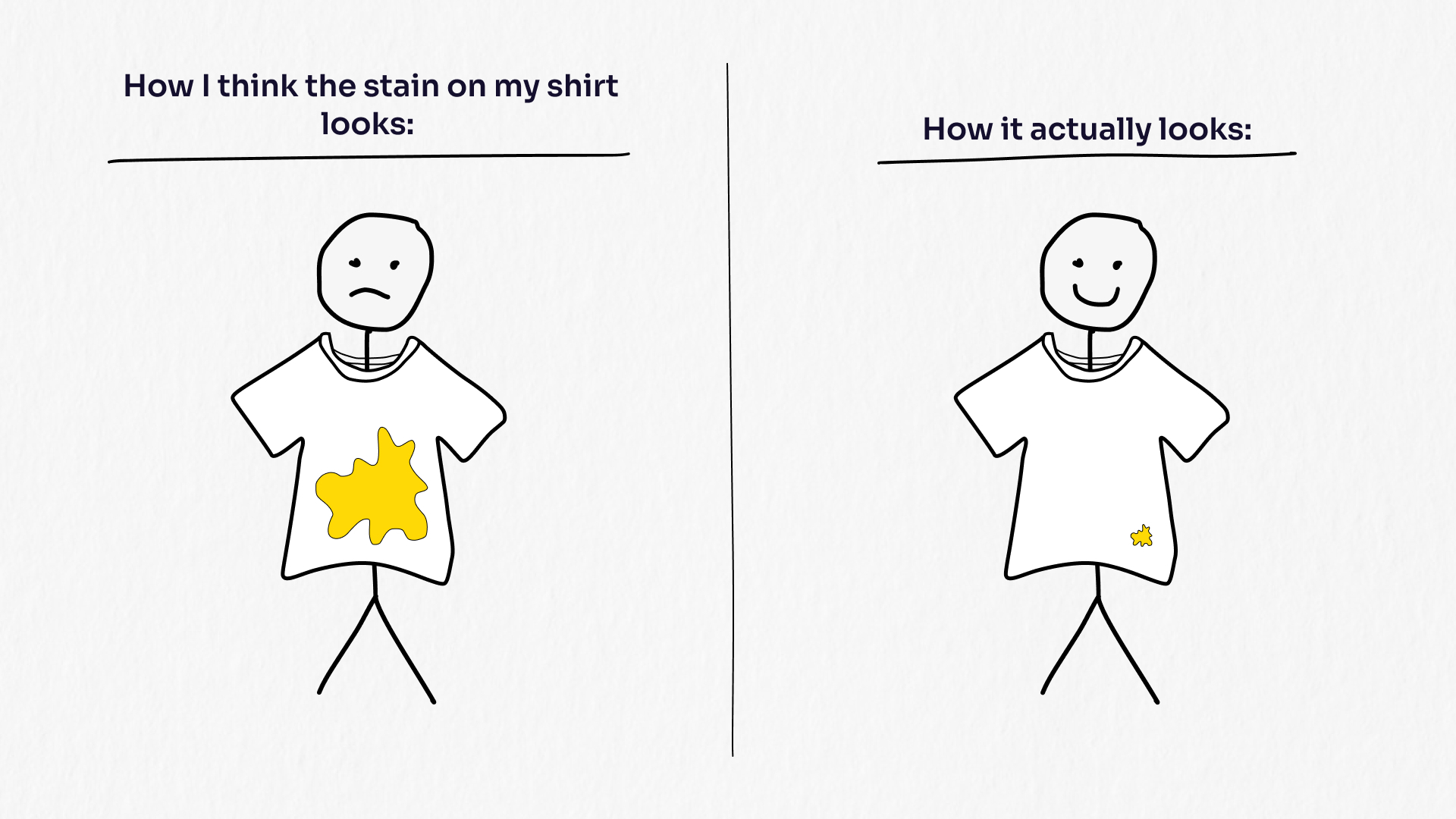
You know that feeling when you have a stain on your shirt?
To you, it’s enormous. It’s all you can see. You’re convinced everyone in the room is staring at it.
But here’s what actually happens: they don’t notice. Or they just don’t care.
Your audience feels what you feel. When you’re nervous, they get uncomfortable. When you’re relaxed, they relax. When you’re excited, they lean in.
This means they’re actually rooting for you. Not because they’re nice, but because it’s in their self-interest. They want you to succeed. Your confidence is their comfort.
They’re not here to judge your performance. They’re here to connect with you.
That bead of sweat you’re obsessing over? They can’t see it from row three. That weird word that came out wrong? They already forgot it. That moment your voice wavered? They thought you were being passionate.
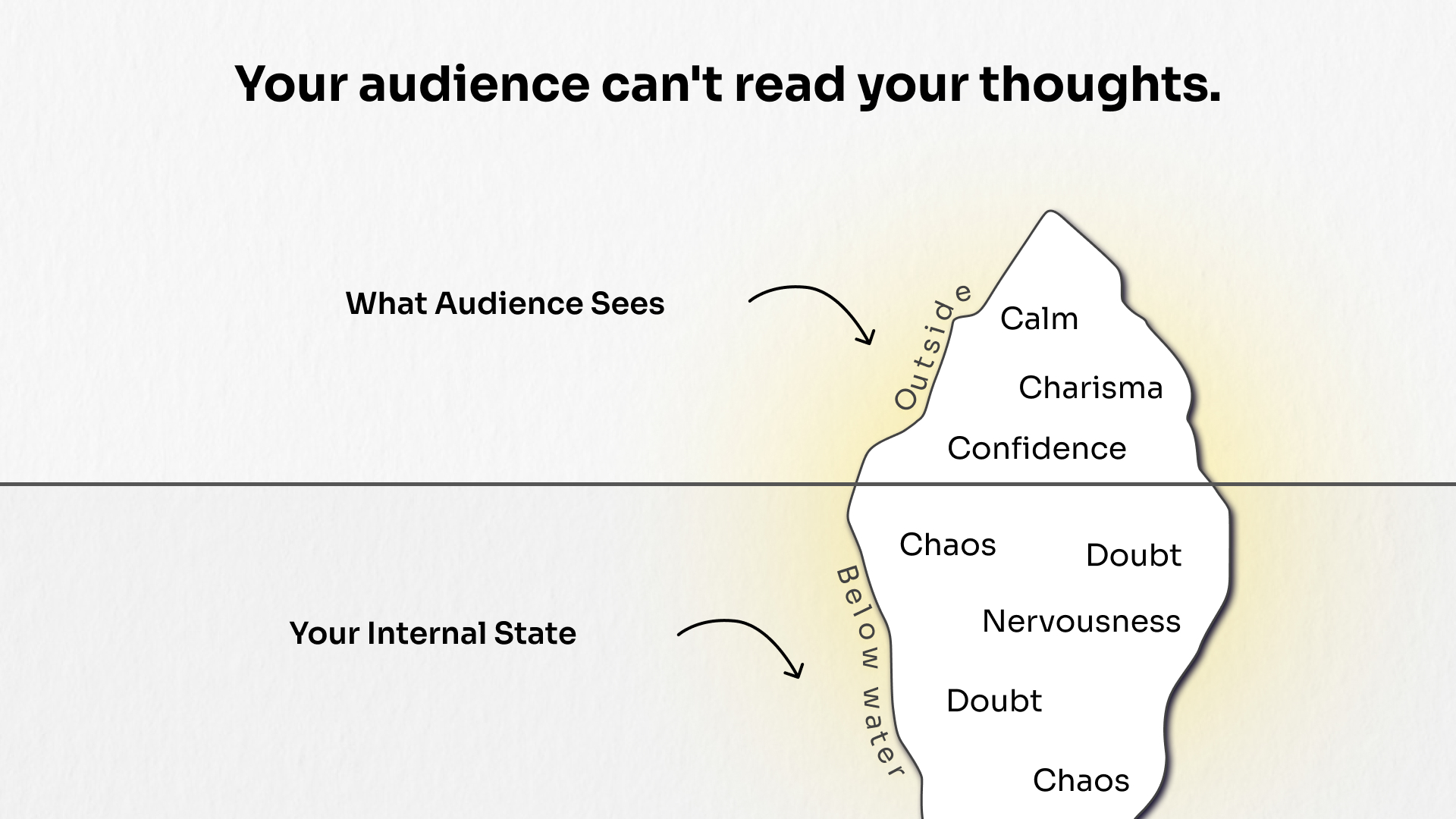
Your audience can’t see what you feel. Unless you tell them.
What “leaking” looks like
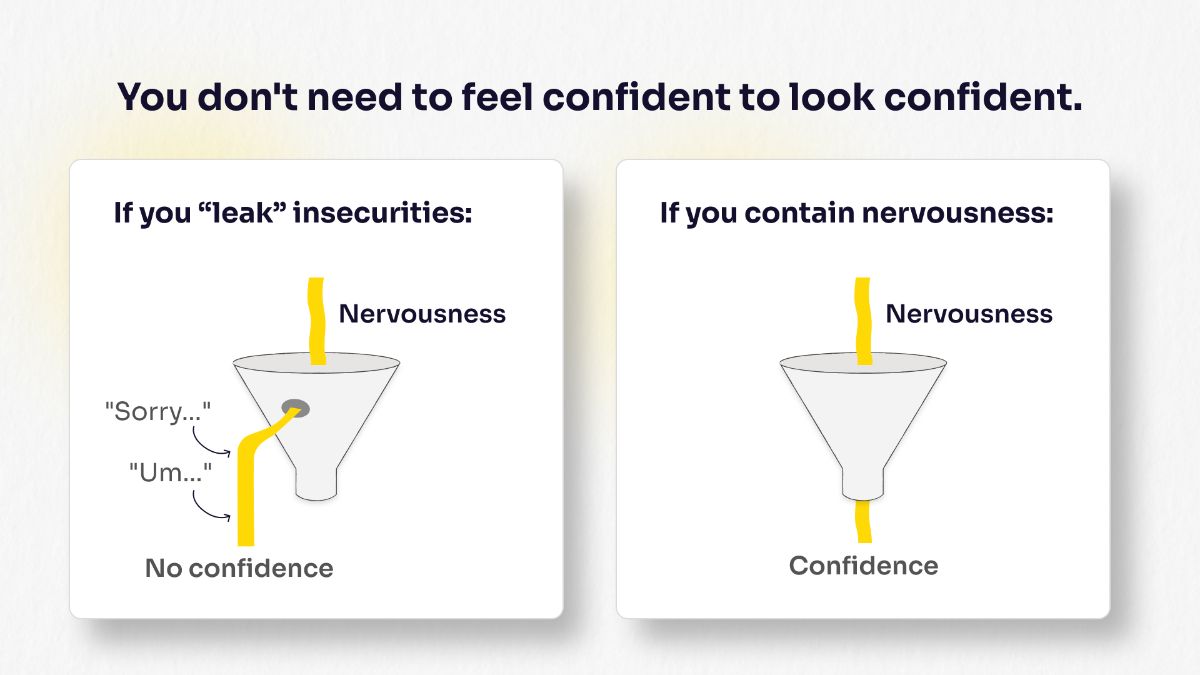
When you say things like “I’m not sure if that makes sense…” or “Sorry, let me start over…”, or you give a nervous laugh after a weird word comes out, you’re leaking your insecurities.
Leaking is when you verbally or physically reveal nervousness that your audience wouldn’t have noticed otherwise. Remember the stain? Leaking is when you point at it.
You think you’re defusing tension. But actually, you’re creating it.
It’s like a pilot picking up the intercom mid-flight: “Ladies and gentlemen… I just had a red light start blinking here in the cockpit. I’m not sure what this is. Could be really bad, honestly.”
First thought:

Second thought: wait… something probably IS wrong.
Third thought:

Now every bump of turbulence makes you think: we’re going to die.
That’s what happens when you leak. You point at an empty corner and say “Look at that elephant”, and suddenly everyone’s looking for problems.
(By the way, this hilarious 20-second Family Guy clip gives you a great idea of what your audience feels like when you leak.)
The loop that traps you
Speaking heightens your senses. It makes you hyperaware of everything, especially yourself.
Normally, you might sweat a little and never notice. But when you’re presenting, that small bead of sweat feels like a crisis: “Oh god, I’m sweating. Can they tell?”
Your brain invents causality that isn’t there.

You notice something. You interpret it as a problem. You get more nervous. The sensation intensifies. You notice more. The loop feeds itself.
Maybe for you it’s your voice wavering. Your hands trembling. A word coming out weird. The sensation doesn’t matter. The loop is the same.
Breaking the loop
The good news is that the loop works in reverse too.
When you refuse to leak, and you stay steady even though your heart is pounding, your audience treats you as confident. Because to them, you are confident. And that response makes you feel more confident.
Refuse to leak. The audience responds positively. You feel confident. It gets easier to stay steady.
Here’s how to make this practical.
“They’re not looking at your stain.” Next time you feel exposed, remind yourself: the spotlight you feel isn’t real. The audience is here for you, not your flaws.
Use “stay in it” as your override. When you feel the urge to apologize or hedge, say three words to yourself: “Stay in it.” The worse it gets, the more you repeat it. Your brain can only hold one instruction at a time. (Bonus: this also works in saunas, cold plunges, and conversations with your in-laws.)
Land the plane smoothly. As you approach the end, your brain naturally becomes more self-conscious. That’s when people sabotage themselves with “But I don’t know, maybe that’s wrong…” Instead, give your brain the first half of your ending: “So to wrap up…” Your brain fills in the rest.
Back to my disaster
So there I was. Halfway through my song. I’d just made the most embarrassing sound into a microphone. Someone laughed. And I was supposed to whistle again.
Then it hit me: I’d already gone through the worst-case scenario. The thing I was afraid of had already happened.
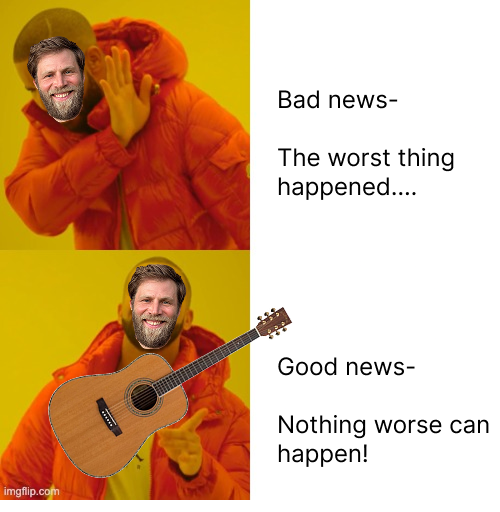
Which meant there was nothing left to fear.
My shoulders relaxed. I opened my eyes. For the first time, I started to enjoy it.
When the last verse ended, I licked my lips, and a clear, lovely whistle came out.
The humiliation stung at first. But it faded fast. What replaced it was something I didn’t expect: freedom.
You already have what you need
When asked how he created David, Michelangelo reportedly said: “It was easy. I just removed everything that wasn’t David.”
Confident speaking works the same way. You don’t need to add a persona. You just need to stop leaking.
What’s left is the speaker you already are when you’re talking to a friend. Relaxed. Clear. You.
That speaker is already in there. You just need to practice finding them in the right setting.
Our free “Stay Confident Under Pressure” class is a playful setting to practice exactly this. It’s not a webinar. It’s the first lesson of our flagship program, so you’ll be going through the exercises with other attendees.
Remember, if it feels good, you probably look good too.
Tristan
Common questions about nerves when you speak
Should I tell the audience I’m nervous?
No. It feels honest, but it hands them a problem they didn’t have. Your audience feels what you feel, so the moment you announce the nerves, they start watching for them, and the room gets tense on your behalf. They were not judging you; they were rooting for you, because your steadiness is their comfort. Keep the nerves, skip the announcement, and let them see the speaker who shows up when you stay in it.
Can the audience actually tell when I’m nervous?
Far less than you think. Speaking sharpens your senses, so a dry mouth or a shaky hand feels enormous to you and is invisible from row three. What the audience sees is the top of the iceberg: calm, conviction, maybe a bit of passion where you felt a wobble. They only find out what is underneath when you point at it with “sorry”, a nervous laugh or “I’m not sure that made sense”.
How do I stop apologizing and hedging when I speak?
Don’t try to remove the habit. Replace it. Your brain can hold one instruction at a time, so give it “stay in it” whenever the urge to apologize shows up, and give it the first half of your ending, “so to wrap up…”, when you feel yourself drifting toward “but maybe that’s wrong”. Then practice it somewhere nothing is at stake. The free Ultraspeaking app has timed speaking games built for exactly that, and our free live class lets you try it with other people in the room.
What does “leaking” mean in public speaking?
Leaking is revealing, in words or body language, a nervousness your audience would not have noticed on their own. Apologizing for a stumble, laughing nervously, saying “I’m not sure if that makes sense”, or restarting a sentence are all leaks. Each one points at the stain on your shirt. The fix is not to feel less; it is to stop pointing, which is a skill you can practice in low-stakes rooms until it holds in high-stakes ones.