As we have closed our last training course of 2026, this is a good moment to look forward at 2027 and what has changed in the communication training landscape.
We recently went through survey answers from more than 20,000 professionals who signed up for Ultraspeaking over the last three years.
About 80% of them are mid-level to senior professionals at startups, consulting firms, big tech companies, and other corporate environments.
One of the questions was: what communication training have you taken before?
60% said they hadn’t tried anything.
Not a Toastmasters meeting, not a coach, not an online course.
I assume most of them have practiced on their own, in the mirror or with ChatGPT, when a big presentation or an interview was coming. But as a number, it was staggering to me.
Because professionals working in tech, or a startup, or in consulting know well that their jobs have changed a lot in the last year with AI.
AI makes building and launching things fast, which means you are explaining your results to far more people, far more often than you used to. You can’t hide behind a long project timeline anymore and prepare for weeks.
Mark, a senior engineer who leads more than fifty people at one of the world’s largest tech companies, put it this way:
“AI is doing most of the coding work now. What’s left is communication between people. Tomorrow, I’m going to have a conversation with a different group of people. I know what I’m going to say. But I don’t know if I can convey my message clearly.”
So for all the people who have never formally trained their communication skills, the only thing that has failed them is navigating work communication on their own.
They are choosing for the first time, with a browser full of tabs: Toastmasters, Dale Carnegie, a Coursera course, a few private coaches, two speaking apps they saw ads for on Instagram, and Ultraspeaking.
Obviously, I am biased since I work for Ultraspeaking, but a big part of my job is to understand the competitive landscape. So I have interviewed our students who have tried other options and even have experienced our competitors myself. I figured I would share what I’ve learned.
Toastmasters
Toastmasters is a network of local or corporate clubs that meet weekly, in person or on Zoom.
A meeting has a few prepared speeches, a round of Table Topics where members answer surprise questions for a minute or two, and feedback from fellow members in a set format.
International dues are about $144 a year plus a one-time $25 joining fee, and most clubs add a small club fee on top.
You get practice and feedback, but a club shares one meeting between all its members, so you might give a prepared speech every month or two and a Table Topic most weeks. Feedback comes from peers rather than trained coaches, and the quality varies a lot by club. But it is inexpensive and the speaking reps are live with other people, which is key.
Toastmasters is where Ultraspeaking’s founders started their communication journey and it changed their lives. So why did Michael and Tristan start Ultraspeaking if Toastmasters helped them so much?
Three reasons:
- It’s slow for making progress. The low reps mean it can take you years to see a big improvement. Michael joined a Toastmasters meeting every week and it took him about 2 years to feel the transformation.
- Toastmasters doesn’t focus on impromptu speaking skills as much. If you are trying to improve your communication skills at work, 80% of your speaking is answering unplanned questions, getting put on the spot, and participating in meetings where you don’t know where they are going.
- It wasn’t that fun. Toastmasters has a traditional and formal vibe. It can be intimidating and rigid. Michael and Tristan wanted to change the way communication skills are learned so it is enjoyable. The belief is that if you enjoy it, you will practice it more and learn faster.
All in all, I’ve recommended Toastmasters regularly for in-person practicing, in particular. It’s the most popular option on the market.
Dale Carnegie
The Dale Carnegie Course, now called Effective Communications and Human Relations, runs as eight weekly sessions of about three hours, in person or live online. US listings currently show about $2,200 to $2,500 per seat.
It covers more than speaking: confidence, relationships, handling stress, influence.
You do some speaking each session, shared with a large group. The method is nearly a century old, and much of each session is instruction and discussion rather than you doing high-rep practice with the other students.
It is good for people who want a broad people-skills course from a name their company already recognizes. It’s a lot of money for a small number of reps.
Coursera and other video-based courses
The University of Colorado Boulder’s Successful Presentation on Coursera comes up most. It’s about twenty hours of video and exercises. You can audit it free, and a certificate comes with a Coursera subscription. The other big one on Coursera is the University of Washington’s Introduction to Public Speaking, part of its Dynamic Public Speaking series. To its credit, it does push you to practice: you record speeches on your own and upload them for classmates to review. It is still you alone in front of a camera, though. Other good course content I’ve taken are from Vinh Giang (big YouTuber) and MasterClass (with legendary instructors like Vanessa Van Edwards, Daniel Pink, and Matt Abrahams). Prices for courses like this vary from about $200-$800 for a one-time course. Courses like this sometimes include a live Q&A session or two with hundreds of people watching.
The content is good, but the problem is structural: You can’t learn to swim by watching swimming videos. You have to practice. And if you try it on your own in the real world with no feedback loop on how you did, it can be tough to know if it is working.
Plus, I personally find it hard to keep myself accountable with pre-recorded videos.
A private coach
Private coaching is the most tailored option and the most expensive per hour.
Experienced coaches charge about $150 to $400 an hour, and executive coaches often $500 or more.
The right time for a coach is when you have one specific, high-stakes event. A keynote. A board presentation. A wedding speech. You want someone to work on that exact thing with you.
What’s great is completely custom to you, but a coach is one listener. Much of what changes how people speak is watching someone in the same boat try something and seeing it work, and you don’t get that one to one. The reverse is just as powerful: trying something yourself and having three people like you tell you it landed. I can’t tell you how much that helps build confidence. There is something about a coach that makes me feel like they are being paid to tell me I am doing a good job. Peer feedback feels different.
We offer private sessions too, at $250 a session or four for $900.
What’s cool about our cohorts is they all include a private session so you get the best of both worlds.
Practice apps, or your favorite AI (ChatGPT, Claude)
There’s now a whole category of apps that give you communication challenges, tips, and practice.
And plenty of people now rehearse with ChatGPT or Claude, asking for feedback on a script or running a mock interview.
They are cheap or free, and they’re good for one thing: getting daily reps when no human is available. The pressure is zero. Only real people can produce real-world pressure. The key is to practice with people who aren’t your boss or someone who can influence your career.
Ultraspeaking has an app for this reason too. We want to make Ultraspeaking accessible to everyone for free. The app gives you the games, the self-paced courses and some really effective live classes for free. But that will only go so far. To make real change, you need a lot of live practice and feedback and that’s not something these apps are built for.
Ultraspeaking
Our main course is Fundamentals, a five-week live course on Zoom.
It is built to drastically reduce anxiety in high-stakes speaking like exec meetings, big presentations, or getting unexpected questions in an interview. If you find yourself overthinking, over preparing, blanking, freezing, and rambling when pressure is on, this course will help you a ton. The course will also help you be a more clear and compelling speaker through training on storytelling and how to engage any audience.
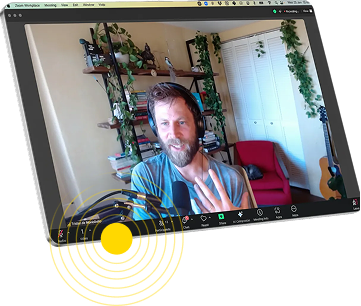
It’s 15 one-hour sessions, three times a week, in a cohort of about 35 people like you. Most of each hour happens in breakout rooms of two or three people with a coach jumping in and giving insights as you are practicing with each other. Personally, I find the magic happens not just with the coach giving their feedback, but with other students too. Every class, you speak three or four times and get feedback on every turn. You are also practicing in an environment where the pressure feels high but the stakes are actually really low.
To put it in context, during a cohort, you will get around 45 to 60 reps in the sessions alone. Most people also join our other live classes happening daily and get closer to 100 reps in 30 days. That’s more than most people have done in 2 years going to Toastmasters clubs.
A Cohort Pass costs $1,995, or twelve monthly payments of $166 (plus a small fee). It includes one 20-minute private coaching session, daily live classes until two months after the course ends, and a certificate if you attend 13 of the 15 sessions. If you attend 13 of 15 and still feel it didn’t work, you get your money back.
And the first session of Fundamentals runs as a free 60-minute class most weeks, with the same games and breakout rooms, so you can find out in an hour whether this format is for you.
The comparison in one table
| Option | What you pay | Minutes speaking to real people | Who gives feedback | Best for |
|---|---|---|---|---|
| Toastmasters | About $144 a year + $25 to join, plus club dues | A few minutes most weeks, a full speech every month or two | Fellow members | A cheap long-term community and prepared speeches |
| Dale Carnegie | About $2,200 to $2,500 for eight sessions | Some each session, shared with a large group | Instructor and group | Broad people skills with a recognized name |
| Coursera video course | Free to audit; certificate with a subscription | None, unless you arrange it yourself | Nobody, or classmates reviewing a recording | Understanding the theory on a budget |
| Private coach | About $150 to $400 an hour, executives $500+ | The whole session, with one listener | The coach | One specific high-stakes event |
| Practice app or AI | Free to about $20 a month | As much as you like, mostly alone or with an AI | Software | Daily reps between sessions |
| Ultraspeaking Fundamentals | $1,995 for five weeks, or 12 x $166 + fee | Three or four turns in every one-hour session, three times a week | Coach and/or peer feedback after each rep | People who want to build their confidence and clarity |
Prices and formats checked in November 2026 on each provider’s public pages. They change often, so treat this as a guide and confirm before you buy.
How I’d choose, by situation
If your job is meetings, updates, Q&A and being put on the spot, you need unprepared speaking practice, not speech writing: Toastmasters’ Table Topics give you a taste of it. Our cohorts are built on it. Almost every Ultraspeaking game is a prompt you didn’t see coming.
If you have one big talk in six weeks, hire a coach for that talk, or book private sessions with us. A group course is the better investment over a year. A coach is the better investment for a date on the calendar.
If money is tight, do Toastmasters, audit the Coursera course, and use our free app and free live classes. You’ll progress more slowly than in a cohort, but you will progress, because you’ll be speaking to people.
If you’re choosing for a team, the question changes. You want people practicing with each other, so the habit survives after the trainer leaves. We run team workshops built on the same games, from a leadership group of a few people to a whole department.
Hope this helps, and I hope I was fair in my assessment.
Anne
Common questions about choosing a public speaking or communication skills course
Ultraspeaking or Toastmasters?
Toastmasters if you want an inexpensive club you can stay in for years and you enjoy prepared speeches. Ultraspeaking if you want a lot of coached, unprepared speaking in a short time, especially for meetings, interviews and being put on the spot. The practical difference is volume and feedback: a Toastmasters member might give a full speech every month or two with peer feedback, while a Fundamentals student speaks three or four times in every one-hour session, three times a week for five weeks, with a coach in the room. Plenty of our students also belong to a club.
Dale Carnegie or a public speaking course for work presentations?
Dale Carnegie’s eight-session course is broad: confidence, relationships, stress and influence, in a large group, at about $2,200 to $2,500. If you want a general people-skills course your company recognizes, it fits. If the problem is specifically how you come across when you present or get questioned at work, you will get more reps for similar money from a course built only on live speaking practice. Our Fundamentals cohort gives you 45 or more coached turns in five weeks, and our Professional L1 cohort, 12 sessions over four weeks, practices executive updates, hard conversations and Q&A directly.
Are Coursera public speaking courses worth it?
For understanding, yes, and you can audit most of them free. For change, no, because you can finish one without speaking to anyone. Take one if you want the theory, then put yourself in a room where you speak every week.
Vinh Giang’s course or Ultraspeaking?
Vinh Giang’s STAGE Academy is a self-paced video course, around 13 hours over seven modules with lifetime access, and he also runs a five-day virtual masterclass and in-person workshops. When we checked in November 2026, the academy and masterclass bundle was listed at $899. His material on voice, body language and stage presence is excellent, and if you want to study the craft at your own pace, it is a good buy. The difference is the format: the academy is mostly you watching him, while Ultraspeaking is mostly you speaking, three or four turns an hour in small breakout rooms with a coach and peers. If your gap is knowledge, take his course. If your gap is what happens to you under pressure, you need reps, and a Fundamentals cohort gives you 45 or more in five weeks.
Should I get a private coach or join a group course?
A coach is right when you have one specific high-stakes event coming up. A group course is right for everything else, because much of what changes how you speak is watching people in the same boat try things and seeing what works. Our cohorts put you in breakout rooms of two or three with a coach, so you get both, and a 20-minute private session comes with every pass.
How much does private public speaking coaching cost?
Experienced private coaches charge about $150 to $400 an hour in 2026, and executive coaches often $500 or more. Packages of four to eight sessions usually run from several hundred to a few thousand dollars. Ultraspeaking private sessions are $250 each, or four for $900.
Is a public speaking course worth the cost?
It depends on what the course makes you do. A $200 video course you never finish is not worth $200. A course where you speak under pressure three times a week with feedback every time changes how you show up in every meeting afterwards, and that compounds. Fundamentals costs $1,995 and comes with a money-back guarantee if you attend 13 of 15 sessions and still are not satisfied. We can offer that because the course is built around doing, not watching.
What is the best public speaking course for nervous speakers?
The best course for a nervous speaker makes you speak under pressure with someone watching, then do it again, in a group small enough that you are not more scared on day one. Look for live practice with real people, feedback after every turn, and rooms of two or three rather than twenty. That is how Fundamentals is built. Watching videos about anxiety will not do it, and neither will a club where you speak once a month.
Can I try a class before I pay?
Yes. Our free 60-minute class is the first session of Fundamentals, live on Zoom, with the same games and breakout rooms as the paid course. You need a free Ultraspeaking account to join, and the account also gives you the speaking games and self-paced courses in the app.
How do I enrol in an Ultraspeaking cohort?
Pick a course and a session time on the Fundamentals page, pay in full or choose the 12-month plan, and you are in. New cohort cycles start several times a year, each with several session times to suit the US, Europe and Asia. The cohort dashboard opens four days before the first session.
Are there evening sessions?
Depending on your time zone, yes.
What is the cancellation and refund policy?
A Cohort Pass comes with a money-back guarantee: attend at least 13 of the 15 sessions, and if you still feel it did not work, email us within five days of the last session for a full refund. Payment plans cannot be cancelled part way through unless a refund is approved. If you cannot make a cohort, ask about deferring to a later one before it starts.
Which public speaking courses use small groups?
Most courses teach in one large group. Ultraspeaking cohorts have about 35 people, but almost all of the hour is spent in breakout rooms of two or three with a coach, so the group you actually speak in is tiny. Private coaching is the smallest group of all, at one.