Most of my public speaking at work has not been a planned presentation in-front of a large group. And it certainly wasn’t common for me to stand up on a stage.
It’s been a weekly update where my boss asks for a follow-up I didn’t know the answer to.
Or it’s being asked to explain a disappointing result to an executive.
Or it’s when I came prepared to present 10 slides in 10 minutes, and I am given 2 minutes. Ugh.
That’s true for most of the people who come to Ultraspeaking.
More than 20,000 professionals have signed up for Ultraspeaking training, and about 80% of them are mid-level to senior people at tech companies, start ups, consulting groups, and other corporate jobs. Very few of them are worried about a keynote.
What I hear most is some version of “It was so clear in my head, why didn’t it come out that way?”
So when someone asks me which online public speaking course is best for a working professional, I start by asking what they are trying to get better at? Is it a toast at a wedding or getting clearer and more confident in their work life?
A big part of my job is understanding the options out there, so I’ve tried some of them and interviewed our students who took the others. If you want the full picture, I wrote a (mostly) unbiased comparison of public speaking courses for 2027.
Why most public speaking courses don’t help you much at work
Most public speaking courses are either built for planned speeches (think Toastmasters) or if they are focused on professionals, planned presentations. You learn how to structure a talk, design slides, make a 3-point agenda opening and close with a call to action. That content can be really good. The University of Washington’s course on Coursera is solid, and so is a lot of what’s on YouTube.
The problem is that most of your speaking at work isn’t a talk you can plan. I’d argue 80-90% of communication at work is unplanned. It’s answering questions, giving updates, pushing back in a meeting and explaining something complicated to someone senior who has five minutes.
You can finish a video course without ever doing any of that in front of a real person.
And the good news is, you already know how to talk about your work.
Over coffee with a coworker you’re clear, you get to the point, you’re probably cracking little jokes, and even telling interesting stories. What changes in the meeting is the pressure.
So more frameworks and more prep don’t fix it. For a lot of us, more prep makes it worse, because now you’re trying to remember a script while someone is waiting for your answer.
What helps is practicing in a room where the pressure feels real, but the stakes are actually low, with other professionals watching and telling you right away how it landed for them as the listener.
What I’d look for if you have a full-time job
I’d look for a course where you’re practicing live with real people and speaking for most of every session, not passively watching.
I’d want feedback right after each turn, not a week later on a recording or none at all.
I’d want a small group of people with jobs like mine, because their reaction tells you more about how you’ll land at work than a coach alone can.
And I’d want sessions short enough to fit into a workday, with a way to try the course before paying. I can’t tell you how many courses I have taken where the marketing was speaking to my soul, but the course was an incredible let down.
Our courses are built for busy professionals.
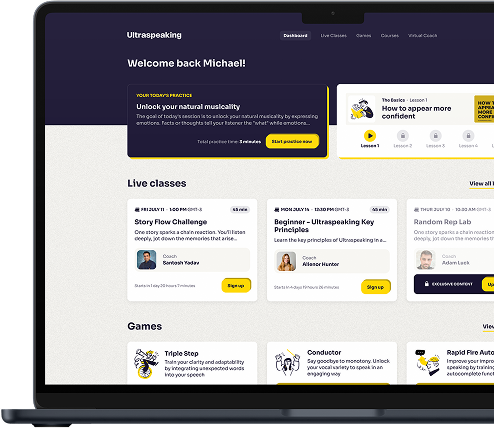
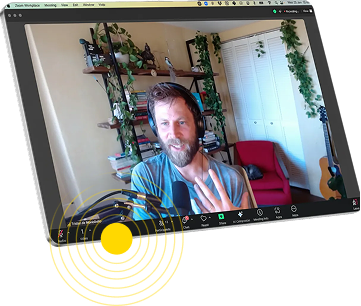
They are one-hour live sessions on Zoom, three times a week for 30 days.
You practice the speaking your job is actually made of: updates to leadership, explaining complex ideas concisely, influencing people, handling hard questions, giving feedback and having difficult conversations, without over-scripting first.
Each cohort has about 35 students, but almost all of the hour happens in breakout rooms of two or three with a coach jumping in. So you speak several times every session and hear how it is received every time, from the coach and from people in jobs like yours. It’s incredible what you learn from peer feedback. I am always surprised (in a good way).
Nirmal Kartha, a principal data scientist who took the course, put it this way: “Easily one of the best live courses I’ve ever attended in my life. Immediately applicable, insanely useful and an extremely supportive community who wants to challenge you and be challenged in a safe setting.”
On fitting it around work: each session is about an hour, and while that sounds like a lot, most video-based courses are 15+ hours of watching (the same amount of time as ours), but you walk away with little to no results. With Ultraspeaking, you are spending those hours doing the reps and getting better much faster.
A lot of professionals also get their company to pay for it from a learning budget.
So which course should you pick?
If you tend to overthink, blank, freeze, stay quiet, feel nervous, or ramble the moment people are looking at you, I’d start with Fundamentals. It’s 15 sessions over five weeks and built for exactly that.
If you’re comfortable speaking under pressure, but feel you lack influence at work: getting buy-in faster, being concise with executives and leading better meetings, I’d go with Professional L1.
If you have one big presentation in two weeks, I wouldn’t start a course at all. I’d book a few private coaching sessions with us.
And if you’re not sure, try one session before you buy anything. Our free live class is the first session of Fundamentals. It’s 60 minutes on Zoom, with the same games and breakout rooms, and you’ll know within the hour whether this way of learning works for you.
Anne
Common questions about public speaking courses for professionals
What is the best online public speaking course for working professionals?
The best one makes you speak, live, under some pressure, with feedback right after each turn, and practices the speaking your job is actually made of: meetings, updates, questions and conversations rather than only prepared talks. Video courses are good for understanding the ideas, but you can finish one without speaking to anyone. Ultraspeaking’s courses are a month of live coaching on Zoom where most of every session is spent practicing speaking exercises in breakout rooms of two or three, with a coach and other professionals giving feedback.
Is there an online public speaking class that fits a 9-to-5 schedule?
Yes, if the sessions are short and live at set times. Ultraspeaking cohorts meet for one hour, three times a week, and each cohort cycle offers several session times for the US, Europe and Asia. You keep the same time for the whole course.
What is a good public speaking course for managers?
Managers do most of their speaking in meetings, feedback conversations and updates to their own leadership, so a course for managers should practice those directly. Professional L1 covers giving feedback, handling difficult conversations, leading meetings and explaining complex ideas to senior people, in small breakout rooms with other professionals. If those situations make you nervous, it might be better to start with Fundamentals L1 to build your confidence before practicing the tactics.
Do online public speaking courses come with a certificate?
Many do. Coursera courses include a certificate with a paid subscription. Ultraspeaking students earn a certificate by attending at least 10 of the 12 Professional L1 sessions, or 13 of the 15 Fundamentals L1 sessions.
How much does a public speaking course for professionals cost?
In November 2026, Toastmasters cost about $144 a year plus a $25 joining fee, the Dale Carnegie course about $2,200 to $2,500, and experienced private coaches about $150 to $400 an hour. An Ultraspeaking Cohort Pass is $1,995, or 12 monthly payments plus a small fee. If you attend the required sessions and still feel it didn’t work, you can email us within five days of the last session for a full refund.
| Option | What it costs | What you get |
|---|---|---|
| Toastmasters | About $144 a year, plus $25 to join and club dues | Weekly club meetings, a prepared speech every month or two, feedback from fellow members |
| Dale Carnegie | About $2,200 to $2,500 | Eight weekly sessions of about three hours, in a large group |
| Coursera | Free to audit. A certificate needs Coursera Plus, at $59 a month or $399 a year | Videos and exercises you do on your own |
| Private coach | About $150 to $400 an hour, executive coaches $500 or more | One-on-one sessions, best for one specific high-stakes event |
| Ultraspeaking (Fundamentals or Professional L1) | $1,995, or 12 monthly payments plus a small fee | 12 to 15 live one-hour sessions over four or five weeks, a 20-minute private coaching session, and a money-back guarantee |
More related reading
How to choose a public speaking course in 2027